
Gentle At-Home Balance Exercises for Fall Prevention — No Equipment Needed
Intro: Build Trust & Connection
Feeling unsteady doesn’t always mean something is “wrong” — often, it simply means your body needs gentle reminders of how to balance again.
Many people avoid exercise because they think it requires equipment, intensity, or a gym membership. But some of the most effective movements for fall prevention are simple, controlled, and can be done safely at home.
This guide focuses on no equipment exercises designed to support balance, coordination, and confidence — without pressure or complexity.
Why No-Equipment Exercises Are Ideal for Balance
Balance improves when the body feels safe.
Using bodyweight alone allows your nervous system to focus on:
Awareness
Control
Stability
Smooth movement
A no equipment exercises removes barriers and makes consistency easier. You don’t need special tools — just a small space, a stable chair or wall nearby, and a few minutes of focused movement.
This approach is especially helpful for people concerned about falling or regaining confidence after periods of inactivity.
How Balance Exercises Support Fall Prevention
Falls rarely happen because of one big mistake. They usually happen because of small factors adding up:
Reduced balance awareness
Slower reaction time
Weak stabilizing muscles
Hesitation during movement
Targeted fall prevention exercises help retrain the body to respond quickly and confidently.
Gentle balance work strengthens the muscles around the ankles, knees, hips, and core — all critical areas for staying upright during daily activities.
Simple No-Equipment Balance Exercises You Can Do at Home
These movements require no equipment and can be adjusted to your comfort level.
1. Supported Single-Leg Stand
Hold a chair or wall lightly. Lift one foot and balance for 10–30 seconds. Switch sides.
Improves balance awareness and ankle stability.
2. Slow Marching in Place
Lift one knee at a time in a slow, controlled rhythm. Focus on posture and steady breathing.
Encourages coordination and confidence.
3. Heel-to-Toe Weight Shifts
Shift weight forward and back slowly. Keep movements controlled.
Improves balance reactions.
4. Sit-to-Stand Practice
Stand up from a chair slowly, then sit back down. Use hands only if needed.
Builds functional strength for daily movement.
Save This Routine
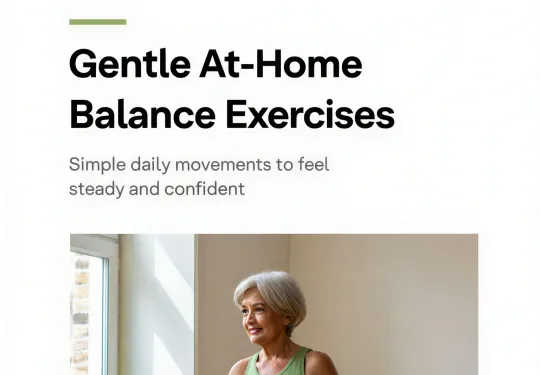
Gentle At-Home Balance Exercises
This Pinterest Pin shows a simple, safe routine designed to support balance and fall prevention — all using no equipment exercises you can do at home.
📌 Tap the Pin to save it and come back to this routine anytime.
Building Confidence One Small Movement at a Time
Balance doesn’t return through force — it returns through familiarity.
Each time you practice these gentle movements, you’re reminding your body how to stay steady. Over time, everyday actions like walking, turning, or standing up feel easier and more natural.
Fall prevention starts with awareness, patience, and supportive movement — not equipment or intensity.
Looking for Extra Support with Balance and Confidence?
Neuro Balance Therapy is designed to help retrain balance through gentle, structured movement that supports stability, coordination, and confidence — especially for those concerned about falling.
✔ No equipment
✔ Safe, guided routines
✔ Focused on real-life movement
👉 Learn more about Neuro Balance Therapy and start feeling steadier today